
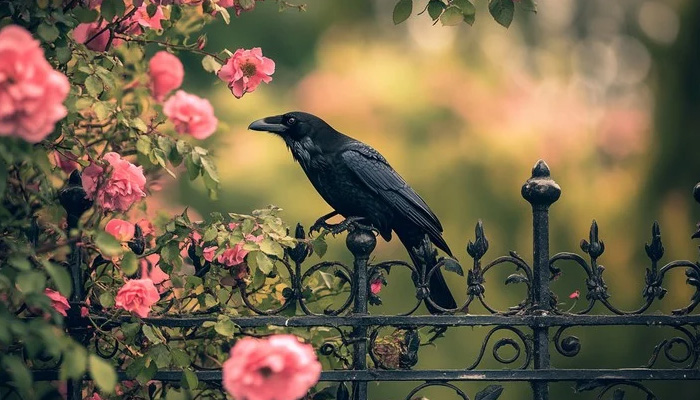
If you love watching birds in your backyard, there’s nothing quite as frustrating as seeing crows dominate your feeders. These clever, bold birds can scare away smaller songbirds and eat a large share of your bird seed. But harming them isn’t the answer—crows are intelligent, social creatures that play important roles in the ecosystem. Luckily, gardening pros have discovered several humane ways to keep crows away from feeders while still welcoming other birds.
Why Crows Are So Persistent
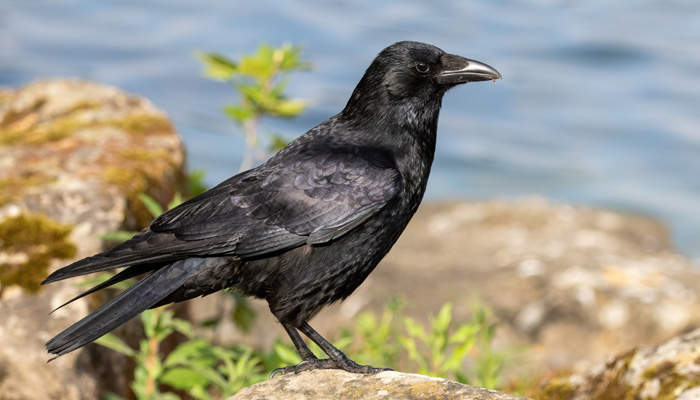
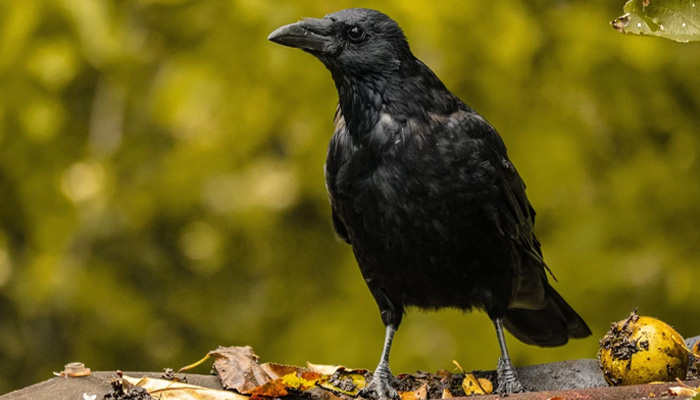
Crows aren’t just big birds—they’re problem solvers. With brains almost as sophisticated as some primates, they can remember human faces, solve puzzles, and figure out how to get to food others can’t reach. Their adaptability makes them a real challenge for gardeners who want to maintain peaceful backyard birdwatching.
They’re also social. Crows travel in family groups, so if one finds your feeder, others are likely to follow. That’s why a single feeder can quickly become a crow magnet. Understanding this behavior is key to gently discouraging them without causing harm.
1. Use Crow-Resistant Feeders
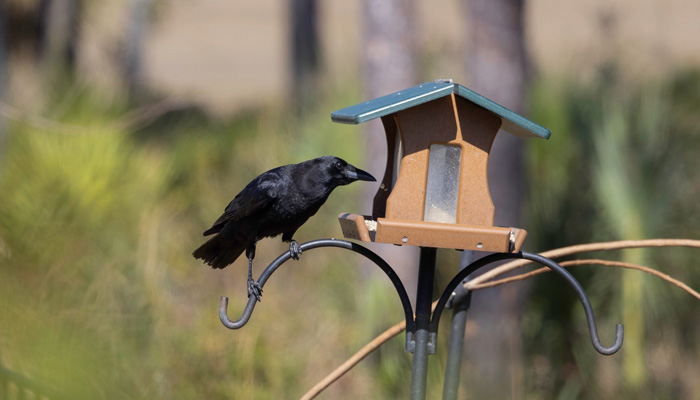
Not all feeders are created equal. Gardening pros suggest choosing feeders that smaller birds can access but crows cannot. Tube feeders with small perches and weight-sensitive feeders are particularly effective. These feeders close off the seed ports when a heavy bird, like a crow, lands on them.
Platform feeders, on the other hand, are open and easy for crows to access. If you already have one, consider switching to a hopper or tube style, or modify it with weight-sensitive mechanisms. Even simple tweaks, like adding smaller openings or perch restrictions, can make a big difference.
2. Offer Seed Crows Don’t Love
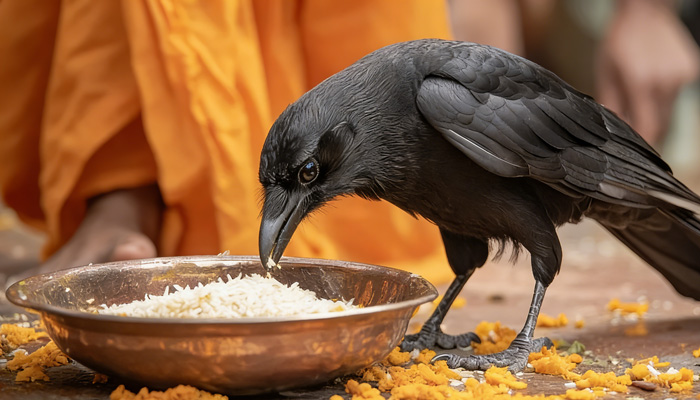
Crows are omnivores with a wide diet, but they aren’t fond of every seed type. Gardening experts note that safflower seeds, for example, are a favorite among cardinals, chickadees, and finches but generally ignored by crows. Similarly, nyjer seeds attract goldfinches but aren’t appealing to larger birds. By selecting seeds that smaller birds prefer, you can naturally reduce the crow traffic at your feeder.
3. Change Feeding Times and Locations
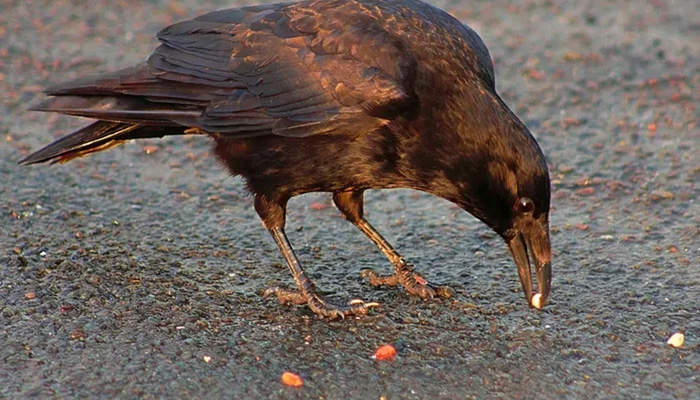
Crows are observant and predictable. They quickly learn where and when food is available. One simple trick recommended by pros is to feed smaller birds at times when crows are less active, like early morning.
Moving feeders periodically can also confuse crows. They remember exact locations, so even shifting a feeder a few feet or to a different part of your yard can slow them down. Some gardeners use multiple small feeding stations rather than one large platform to spread out activity and reduce competition.
4. Use Visual and Auditory Deterrents
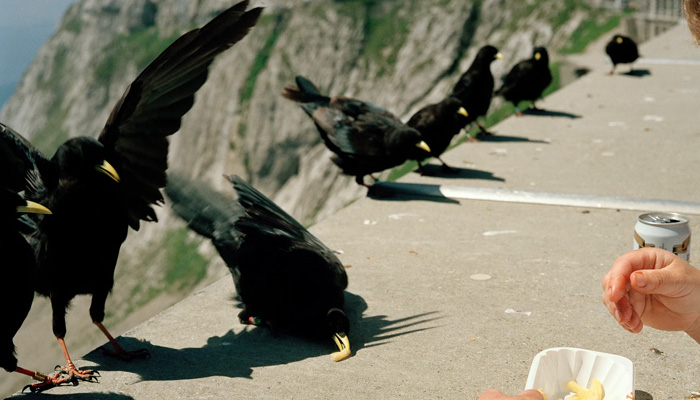
Crows are wary of unusual sights and sounds, which gardeners can use to their advantage. Shiny objects, such as reflective tape, old CDs, or metallic wind chimes, can startle crows and keep them away. Hanging these near your feeders—but not in the way of smaller birds—creates a gentle deterrent without causing harm.
Auditory deterrents, like recordings of crow distress calls, can also work temporarily. However, crows are intelligent enough to realize there’s no actual threat after repeated exposure, so these methods are most effective when used occasionally rather than continuously.
5. Keep Your Yard Clean

Crows are scavengers and will go wherever food is easily found. Gardening pros emphasize the importance of removing fallen seeds, keeping compost covered, and securing garbage bins. Even a small pile of spilled birdseed can attract crows from far away. By minimizing extra food sources, you make your feeders less of a target.
6. Plant Natural Distractions

Another clever strategy is to plant foods that crows love away from your bird feeders. Corn, sunflower, or berry-producing shrubs can provide alternative food sources. When crows have other options nearby, they may leave your main feeders alone. Native berry bushes not only distract crows but also benefit local wildlife and pollinators.
7. Encourage Predators—Safely
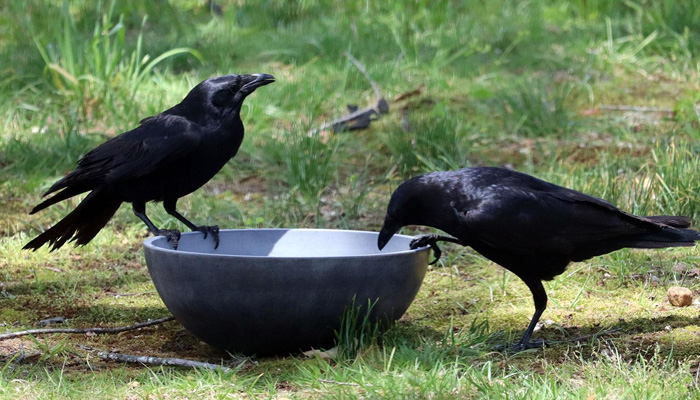
This doesn’t mean letting dangerous animals roam your yard. Instead, visual cues of natural predators can be surprisingly effective. Placing a realistic owl decoy or even a perched hawk statue in sight of your feeders can make crows uneasy. The key is to move these decoys periodically; stationary objects lose their effect as crows get used to them.
A Few Things to Avoid
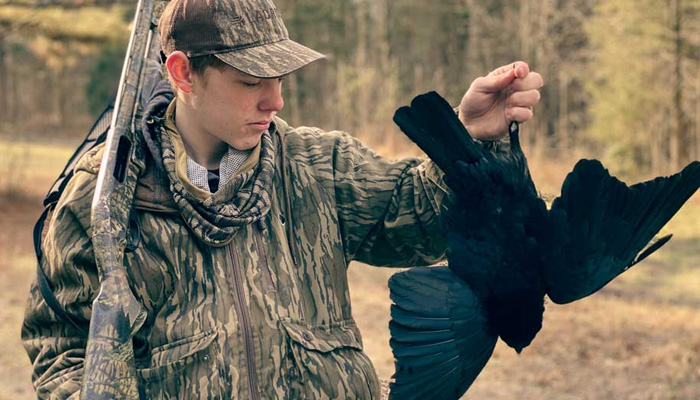
It’s important to avoid methods that harm crows. Poison, shooting, or trapping is illegal in many areas and disrupts local ecosystems. Crows are highly intelligent and social—harming them can have unexpected consequences for your neighborhood. Humane deterrence is always the best route.
Patience Pays Off
It’s rare to completely eliminate crows from your backyard, but with consistent, non-harmful strategies, you can significantly reduce their presence at feeders. The combination of crow-resistant feeders, seed selection, strategic placement, visual deterrents, and a clean yard usually works well over time.
Remember, the goal isn’t to punish crows—it’s to encourage them to feed elsewhere so your smaller songbirds can thrive. By understanding crow behavior and using smart, humane techniques, you’ll enjoy a vibrant backyard filled with a variety of birds, not dominated by a few clever intruders.
Final Thought
Crows are fascinating creatures, and part of the joy of gardening and birdwatching is observing them in a balanced way. With patience, creativity, and a few expert tips, you can protect your feeders, respect wildlife, and keep your backyard a peaceful haven for all kinds of birds.