
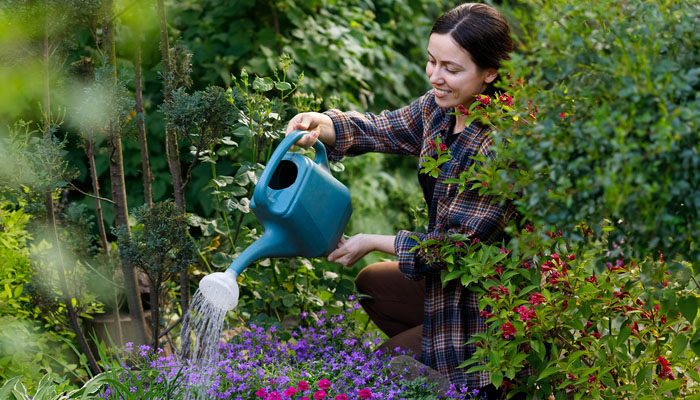
Watering a garden may seem simple, but knowing how much water plants need can be challenging. Too little water stresses plants, while too much can damage roots and lead to disease. The key is keeping soil evenly moist without making it soggy. Understanding when and how often to water helps plants grow stronger roots and produce healthier vegetables and flowers.
1. Why Watering Matters
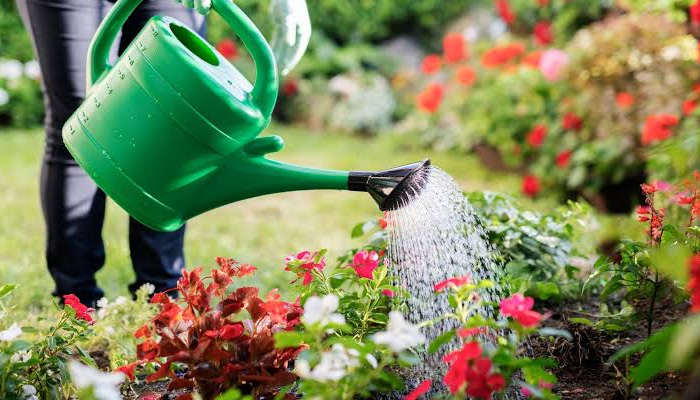
Water is essential for plant growth because it carries nutrients from the soil into plant roots. It also helps plants maintain their structure and perform biological processes such as photosynthesis. When plants do not receive enough water, they become stressed and may stop growing properly.
Too much water can also cause problems. Soil that remains constantly wet prevents roots from getting enough oxygen. Over time, this can lead to root rot, fungal diseases, and weak plants. The goal is to keep the soil moist while allowing excess water to drain away naturally.
Balanced watering supports healthy root development, stronger plants, and better harvests in vegetable and flower gardens.
2. How Often to Water
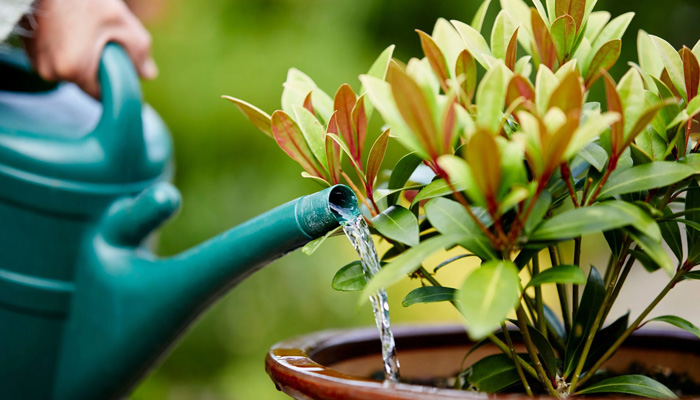
A common guideline for most gardens is about one inch of water per week, including rainfall. Rather than watering lightly every day, it is usually better to water deeply once or twice a week. Deep watering encourages roots to grow deeper into the soil, which helps plants tolerate dry periods.
However, there is no single schedule that works for every garden. The right watering frequency depends on several factors, including climate, plant type, soil conditions, and plant maturity. Young plants and seedlings usually need more frequent watering because their roots are still shallow. Mature plants often require less frequent watering once their root systems are established.
Gardeners should use this guideline as a starting point and adjust based on how quickly the soil dries.
3. Best Time to Water
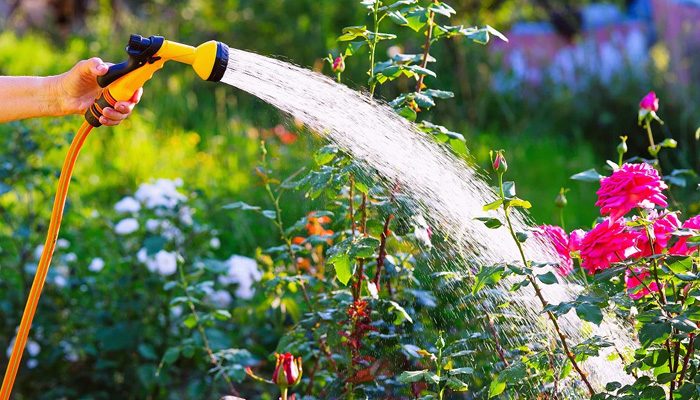
The timing of watering affects how efficiently plants absorb moisture. In most situations, early morning is the best time to water a garden.
Morning watering allows moisture to soak into the soil before the sun becomes strong. This reduces evaporation and ensures that plants receive the water they need. It also gives leaves time to dry during the day, lowering the risk of fungal diseases.
Watering late in the evening can leave plants damp overnight, which may encourage mold or mildew. Midday watering is less effective because heat and sunlight cause water to evaporate quickly.
4. Soil and Water Needs
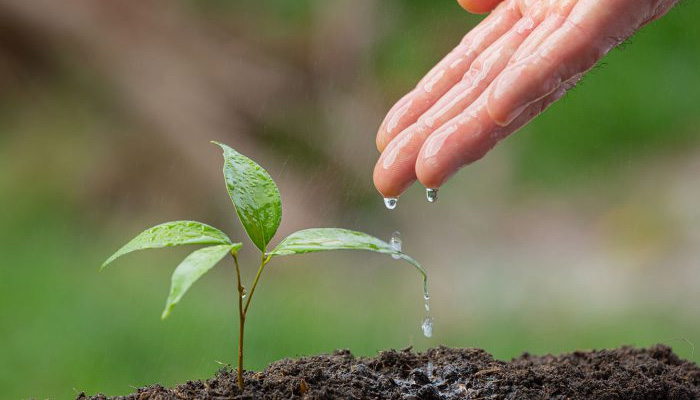
Different soil types hold and release water differently, which affects how often watering is required.
Sandy soil drains quickly and loses moisture fast, so plants may need more frequent watering.
Clay soil holds water longer but can become compacted and waterlogged if overwatered.
Loamy soil balances drainage and moisture retention, making it ideal for most gardens.
Understanding your soil type helps you develop a more accurate watering routine. Gardeners with sandy soil often water more frequently, while clay soils require careful monitoring to avoid excess moisture.
5. Signs Plants Need Water
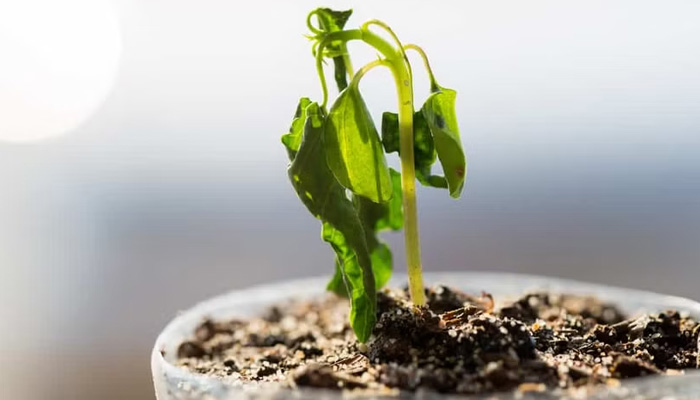
Plants often give visible signals when they need more moisture. Watching for these signs can help you water at the right time.
Common indicators include:
Wilting or drooping leaves
Dry or cracked soil surface
Slower plant growth
Leaves losing their bright color
Leaf edges curling or browning
A simple method to check soil moisture is the finger test. Insert your finger about two to three inches into the soil. If it feels dry at that depth, the garden likely needs watering.
6. Signs of Overwatering
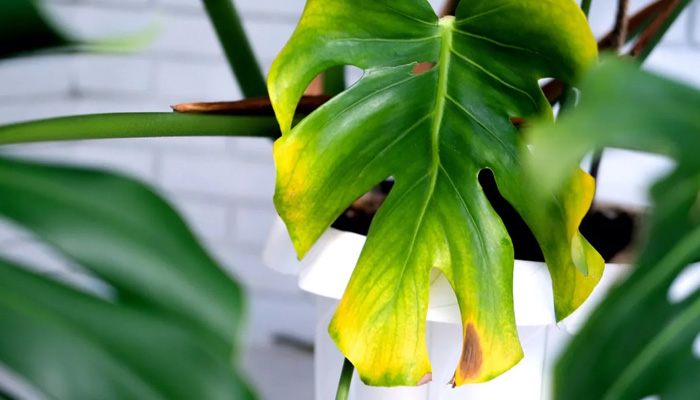
Overwatering is a common mistake, especially for new gardeners. Too much water can damage plant roots and reduce plant health.
Warning signs include:
Yellowing leaves
Soft or mushy stems
Mold or algae on the soil surface
Persistent wet soil
Plants appearing weak despite frequent watering
Healthy garden soil should feel slightly moist but not soggy. Allowing the soil surface to dry slightly between watering sessions helps maintain proper balance.
7. Weather and Watering
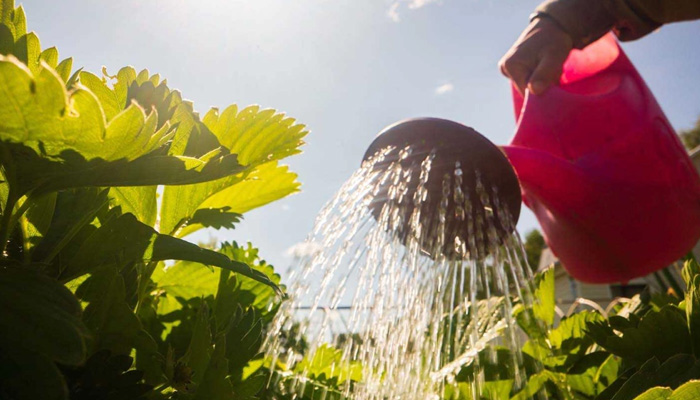
Weather conditions greatly influence how quickly soil loses moisture. During hot and sunny weather, plants lose water faster through evaporation and natural processes. Gardens may require additional watering during heat waves.
Rainfall can significantly reduce watering needs. After a heavy rain, soil moisture may remain adequate for several days. Wind can also increase moisture loss by drying the soil more quickly.
Cooler temperatures during spring or fall generally reduce water needs. Instead of following a strict schedule, gardeners should adjust watering habits based on current weather conditions.
8. Watering Different Gardens
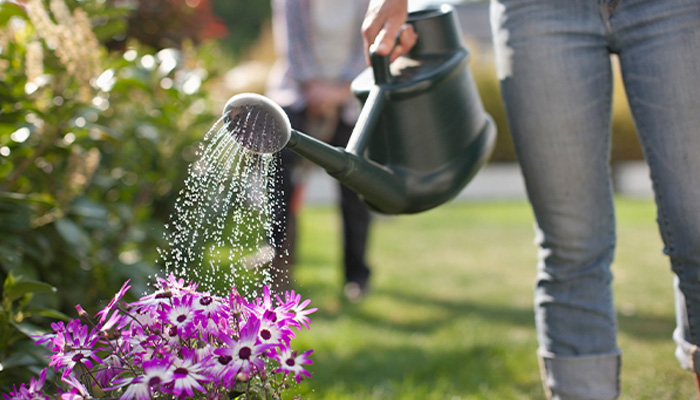
Different types of gardens require slightly different watering approaches.
Vegetable gardens usually need consistent moisture to support fruit and vegetable production. Uneven watering can affect crop quality and yield.
Raised beds tend to drain faster because they sit above ground level. This means they may require more frequent watering during warm weather.
Container gardens dry out quickly because the soil volume is limited. Potted plants may need daily watering in hot conditions.
Newly planted seedlings also require extra attention. Their shallow roots cannot reach deeper soil moisture, so regular watering helps them establish strong growth.
9. Watering More Efficiently
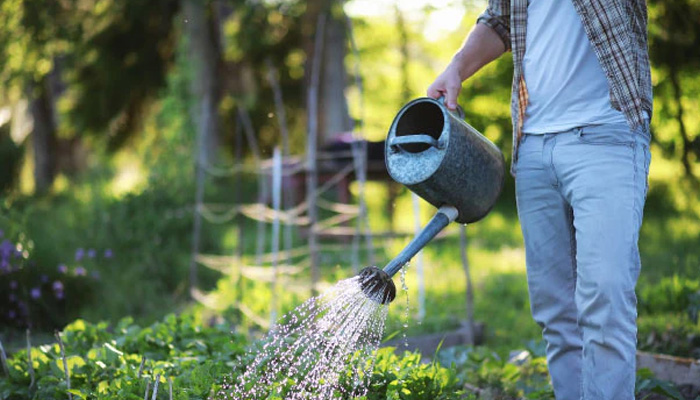
Simple techniques can improve watering efficiency and reduce water waste.
Use mulch to reduce evaporation and keep soil moisture stable.
Water deeply instead of lightly sprinkling the surface.
Install drip irrigation or soaker hoses to deliver water directly to plant roots.
Avoid wetting leaves unnecessarily to reduce disease risks.
Efficient watering supports healthier plants while conserving water in the garden.