
Winter is tough—not just for us humans, but for the birds who visit our backyards. Cold temperatures, frozen water, and limited food sources make it a challenging season for our feathered friends. But the good news? You can make a huge difference with just a few simple choices in what you put out for them. Experts agree that the right foods not only help birds survive but also keep them healthy, energetic, and returning to your feeders all season long.
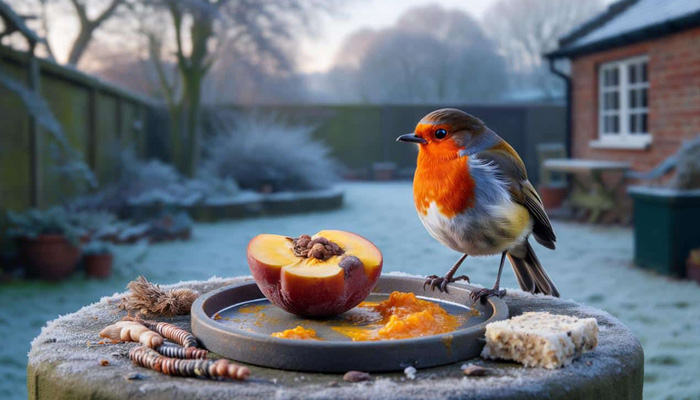
Here’s a breakdown of seven foods that can make your backyard a winter bird oasis.
1. Black Oil Sunflower Seeds
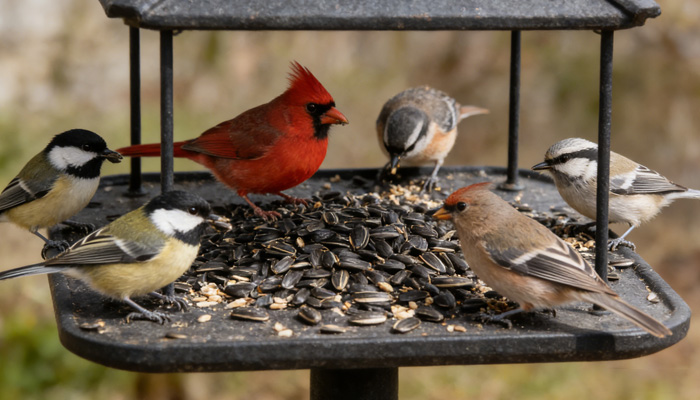
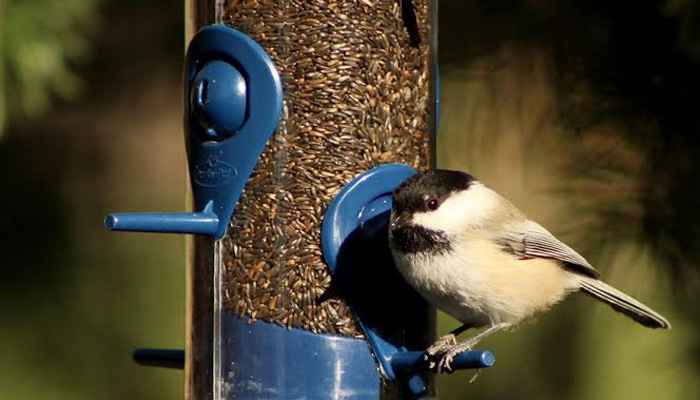
If you could give birds one superfood, it would probably be black oil sunflower seeds. These seeds are small, easy for a wide variety of birds to handle, and packed with fat and protein—exactly what birds need to fuel themselves during chilly days.
Experts say that chickadees, cardinals, finches, and nuthatches all love them. The thin shells make it easy for birds to crack open the seeds quickly, which is important when they’re trying to conserve energy in freezing weather. Even squirrels enjoy them, so you might need a feeder that keeps these backyard “gatecrashers” out.
2. Suet Cakes
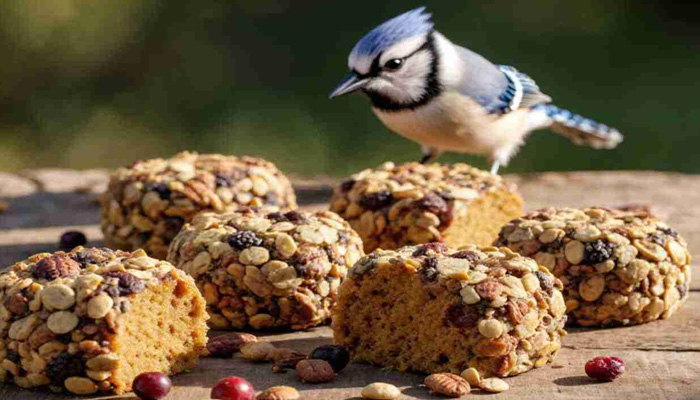
Suet is basically a block of animal fat, sometimes mixed with seeds, nuts, or fruits. It’s calorie-dense, which makes it perfect for birds that need a quick energy boost to stay warm. Woodpeckers, titmice, and wrens are among the birds that flock to suet feeders.
You can buy suet cakes at most pet or hardware stores, or even make your own at home. Some feeders hang the suet, which keeps it off the ground and away from animals that might steal it. In cold weather, suet doesn’t spoil quickly, making it a reliable winter food source.
3. Peanuts (Shelled or In the Shell)
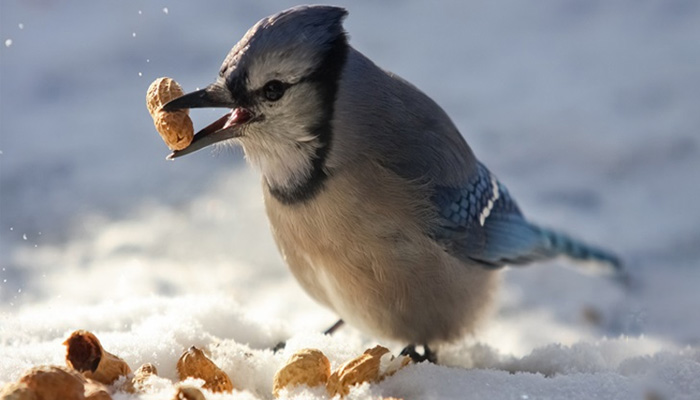
Birds go nuts for peanuts, literally. High in fat and protein, they’re a perfect winter snack. Blue jays, woodpeckers, titmice, and nuthatches are frequent peanut visitors.
If you’re offering peanuts in the shell, make sure they’re unsalted. Salted peanuts can be harmful to birds. You can also use shelled peanuts, but watch out—they’re easier for squirrels to grab. A peanut feeder with a mesh design works well to let birds in while keeping larger critters out.
4. Nyjer (Thistle) Seeds
Small but mighty, nyjer seeds are a favorite for finches, including goldfinches, siskins, and redpolls. These seeds are tiny, oil-rich, and full of energy.
They’re best offered in a special nyjer feeder, which has tiny holes to prevent the seeds from spilling and to discourage bigger birds from taking over. Don’t worry about the seed size—it might seem too small, but birds know exactly what to do with it. Plus, watching finches feed from these feeders is surprisingly entertaining!
5. Raisins, Currants, and Other Dried Fruits
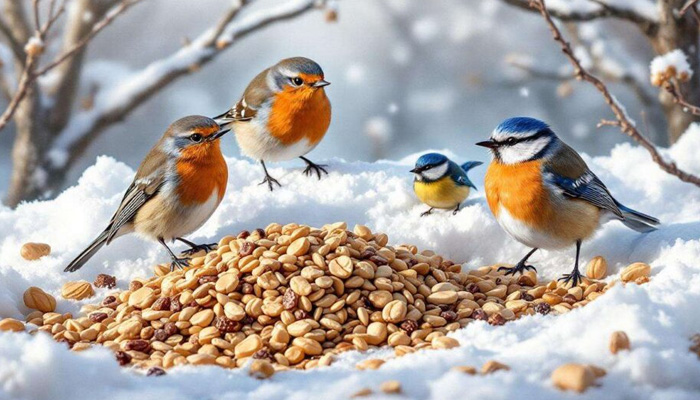
Fruits aren’t just a summer treat for birds—they can also provide winter energy. Dried fruits like raisins and currants are sugar-rich, giving birds an extra calorie boost on cold days.
Robins, waxwings, and mockingbirds are particularly fond of these treats. You can scatter dried fruits on a platform feeder or mix them with seeds in a hopper feeder. Some people soak them in water to make them softer for smaller birds, especially if temperatures drop well below freezing.
6. Cracked Corn
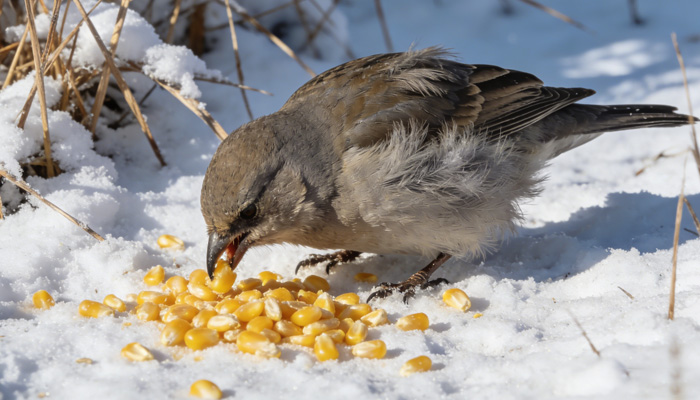
It might feel old-fashioned, but cracked corn is still a winter staple for backyard birds. It’s high in carbohydrates, which provide energy for long, cold nights. Ground-feeding birds like juncos, sparrows, and doves enjoy cracked corn.
To keep things tidy, scatter it on a platform feeder or directly on the ground in areas away from cats or other predators. Cracked corn works best when it’s dry, as wet corn can mold quickly in cold, damp conditions.
7. Mealworms
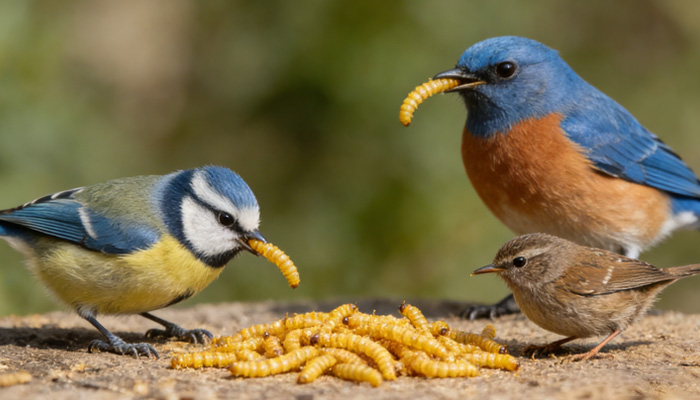
Mealworms might not look like the most appealing snack to us, but birds find them irresistible. They’re packed with protein and fat, making them ideal for winter survival. Chickadees, bluebirds, robins, and wrens all happily peck away at live or dried mealworms.
You can buy them at pet stores or online. Offer them in a shallow dish or a special feeder. If using live mealworms, it’s a good idea to keep them refrigerated until use—they stay fresh longer and don’t attract pests as quickly as warm ones.
Bonus Tips for Winter Bird Feeding
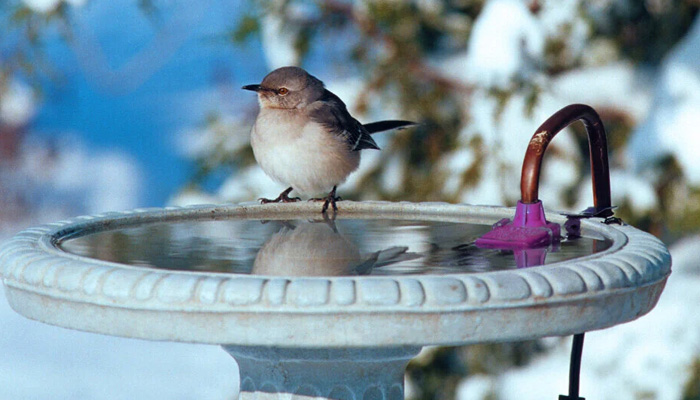
Fresh Water is Essential: Birds need water for both drinking and bathing. Heated birdbaths or adding a small heater to a regular birdbath can make all the difference in freezing weather.
Keep Feeders Clean: Moldy or wet food can harm birds. Scrub feeders regularly with hot water and mild soap, then rinse thoroughly.
Offer Variety: Different species have different tastes. By offering a mix of seeds, suet, fruits, and mealworms, you can attract a wider variety of birds.
Placement Matters: Place feeders near shrubs or trees to give birds a safe place to hide from predators.
Feeding backyard birds in winter isn’t just about helping them survive—it’s also about creating a lively, joyful backyard scene. Watching a variety of birds flock to your feeders, chirping and bustling about in the snow, is one of winter’s simple pleasures.
So next time you fill your feeders, remember: the right foods can make a huge difference. With black oil sunflower seeds, suet, peanuts, nyjer, dried fruits, cracked corn, and mealworms, you’ll not only help birds survive the winter—you’ll also give yourself front-row seats to one of nature’s coziest shows.